
Pilot case studies
HuMUS deploys the EU Soil Mission by creating collective spaces of constructive dialogue on soil health and soil quality threats, both inside and outside the consortium, which should adopt participatory governance methods and tools for soil quality and health governance in the territories involved. The pilot projects are experimental and time-bound local examples of the HuMUS methodology to implement participatory governance of soil health issues at municipal and regional levels.
HuMUS works with two sets of pilot projects:
- Pilot projects from the Open Call
- Pilot cases of consortium partners
By the end of the project, all the pilots delivered a signed co-created Territorial Management Agreement based on the Territorial Management Agreement Template Guidelines.

1. Pilot projects from the Open Call
The Call for proposals identified and supports 20 Pilot Projects, involving a total number of at least 300 Quadruple Helix stakeholders. They consist of farmers and other entrepreneurs, including SMEs, consumer associations and other NGOs, professional soil experts, researchers and academics, government managers and public officials, as well as the general public of the Pilot location.
Before the end of their lifetime, the 20 Winners of this Call were expected to deliver:
- The copy of a signed Territorial Management Agreement by all relevant Quadruple Helix stakeholders of the chosen Pilot Location;
- Evidence of successful adoption of the HuMUS Methodology, as described in Annex G to this Call, or of another equivalent approach to instantiate the concept of participatory governance of soil health issues and threats at local or regional levels, gathered in the form of a Short final report;
- An analysis of replication potential of the Pilot Project and approach, including details of the specific methodology adopted and highlighting the main barriers, drivers, enablers, and conditions for constructive dialogue and participatory governance of soil health issues and threats to materialise at the regional or local levels in Europe.
2. Pilot cases of consortium partners
Using the biological district multi-stakeholder approach, HuMUS selects stakeholders to develop Territorial Management Agreements at the local or regional levels. In the selected territories, HuMUS consortium partners identified 14 exemplary cases that represent good practices of participatory soil health management and analyse and test the case studies’ replicability in the home region of each project partner. These cases could be part of future Living Labs or Lighthouses under the Soil Mission.
Over time, Territorial Management Agreements crystallised the results of structured dialogues to co-design public and private strategies to improve and restore soil health at regional and local levels in coherence with existing EU legislation and the forthcoming EU Soil Health Law. The 14 pilot cases described below organised territorial workshops during 2024 to reach a territorial management agreement that was replicated in other territories during 2025.

Pilot cases from the consortium
Sierra Nevada (Granada, Andalusia, Spain)

Focus: Soil & regenerative grazing (mountain areas), Land use: Agriculture
Good practice: Participatory methods and approaches for improving soil management in traditional farming systems in mountain areas
Partner organisation: Agencia de Gestión Agraria y Pesquera de Andalucía (AGAPA)
Altiplano de Granada y Almería (Andalusia, Spain)

Focus: Soil & regenerative agriculture (semi-arid areas), Land use: Agriculture
Good practice: Participatory methods and approaches for the promotion of products from regenerative agriculture
Partner organisation: Agencia de Gestión Agraria y Pesquera de Andalucía (AGAPA)
Calenzano (Tuscany, Italy)

Focus: Soil & biodiversity, Land use: Urban / Agriculture
Good practice: Participatory methods and tools for the constitution of the Organic District
Partner organisation: ANCI Toscana
Fiesole (Tuscany, Italy)

Focus: Soil & landscape preservation, Land use: Urban/Agricultural
Good practice: Participatory methods and tools for the constitution of the Organic District
Partner organisation: ANCI Toscana
Cáceres and Badajoz (Extremadura, Spain)

Focus: Soil & water quality, Land use: Agriculture
Good practice: Diffusion of fertilization recommendations by a free and open
web platform
Partner organisation: Asociación Empresarial de Investigación Centro Tecnológico Nacional Agroalimentario Extremadura (CTAEX)
Angers Loire Métropole (Pays de la Loire, France)

Focus: Soil & land preservation, Land use: Agriculture / urban
Good practice: Awareness of local authorities for soil and agronomic quality conservation: fostering the soil as heritage and natural capital.
Partner organisation: Chambre Régionale d’Agriculture des Pays de la Loire
(CAPDL)
Ooststellingwerf (Friesland, the Netherlands)

Focus: Soil & regenerative agriculture, Land use: Agriculture
Good practice: Co-creation to overcome soil threats (permanent grassland and regenerative agriculture approaches)
Partner organisation: Stichting Louis Bolk Instituut (LBI)
Stuttgart City (Germany)
Focus: Soil & urban agriculture, Land use: Urban and peri-urban
Good practice: Replication and exchange of Good practices between different regions and cities (food production, supply and improvement of soil health, green corridor between densely populated cities)
Partner organisation: Ernährungsrat Stadtregion Stuttgart EV. (ERSTR_UHOH)
North Rhine-Westphalia Region (Germany)

Focus: Soil & biology, Land use: Agriculture
Good practice: Assessing and showcasing the value of biological indicators in evaluating soil health status
Partner organisation: Landwirtschaftskammer Nordrhein-Westfalen (LWK_NRW)
Central Stara Planina Region (Bulgaria)

Focus: Soil & urban agriculture, Land use: Urban
Good practice: Shared composting in urban environment
Partner organisation: Regionalno Sdruzhenie Na Obstini Tsentralna Stara Planina (RAM)
Podravje Region (Slovenia)

Focus: Soil & regenerative agriculture, Land use: Urban
Good practice: Participatory rehabilitation and revitalization of soil (plans for rehabilitation and revitalisation of abandoned and devalued lands owned by municipalities)
Partner organisation: Regionalna razvojna agencija za Podravje – Maribor (RRA)
North Macedonia

Focus: Soil & regenerative agriculture, Land use: Urban agriculture
Good practice: Regional Soil Partnership (broaden the stakeholder basis)
Partner organisation: Regional Rural Development Standing Working Group in SEE (SWG_RRD)
South Tyrol (Italy)

Focus: Soil & regenerative agriculture, Land use: Agriculture (mountain areas)
Good practice: Scaling up of the methods, tools and approaches to the Regional level (improve fertilisation and funding monitoring of soil properties)
Partner organisation: Libera Università di Bolzano (UNIBZ)
Varaita Valley (Italy)

Focus: Soil & regenerative agriculture, Land use: Agriculture (mountain areas)
Good practice: Scaling up of the methods, tools, and approaches to the regional level (agroecological approaches and living lab)
Partner organisation: Università degli Studi di Scienze Gastronomiche (UNISG)
Pilot cases from the Open Call
Building Resilience: A Transdisciplinary Approach to Soil Conservation (Abla, Spain)

The project “Building Resilience: A Transdisciplinary Approach to Soil Conservation in Abla” was developed in response to the clear degradation of local soils, driven by a semi-arid climate, erosion-prone terrain, and a crisis in traditional agriculture, factorsthat have led to widespread land abandonment. Adding to the challenge is the general lack of awareness about the issue, which makes finding effective solutions even more difficult.
To address this situation, the project organized a series of participatory workshops aimed at: diagnosing the main ecosystem services provided by soils in Abla’s most representative landscapes, Identifying the key threats to soil health, and developing an action plan focused on soil conservation or restoration, with the ultimate goal of improving the health of the municipality’s landscapes. The methodology was based on Participatory Action Research (PAR) principles. In the context of this pilot study, the approach included four key phases: (i) Pre-diagnosis, (ii) Participatory diagnosis, (iii) Identification of soil health indicators, and (iv) Co-creation of a participatory action plan. In total, 75 individuals took part in the project. As key solutions, nine actions were proposed. For each action, the main responsible stakeholders, specific tasks, implementation timelines, required resources, and potential barriers were clearly defined.
BûjemBoost: Enhancing Soil Governance in Hasselt’s Urban Environment (Hasselt, Belgium)

A field study was conducted on 23 partially shaded road verges in Hasselt, Belgium. Soil
samples and vegetation data were collected to evaluate soil health indicators such as soil
organic carbon (SOC) and microbial activity, and metrics related to plant diversity and nectar provisioning. Results revealed that SOC levels were consistently high across shaded and non-shaded conditions, nearing levels found in semi-natural grasslands. The findings support the current practice of extensive mowing and biomass removal to maintain healthy, biodiverse verges,
while highlighting the potential for optimizing management further for both ecological and socio-economic factors.
Stakeholder participation was integral to the project’s design and execution. Focus groups
and citizen outreach informed the research direction, methodology, and site selection, while providing critical insights into socio-economic considerations such as cost, safety, and aesthetic perceptions. This participatory approach enabled the formulation of realistic,
context-specific management recommendations that balance ecological outcomes with public and administrative expectations.
Circolar4Umus (Grezzana, Italy)

As part of the HuMUS project, the Circular4HuMUS pilot led by the Municipality of Grezzana, in collaboration with Ecoloop, promotes a territorial approach to soil health, sustainable agriculture, and circular resource management in the Valpantena Valley, Northern Italy.
The project addresses several interconnected challenges: soil degradation, inefficient organic waste management (especially pruning residues), lack of shared governance, and the need for regenerative practices across agricultural and public land. These issues are tackled through the development and implementation of a Territorial Management Agreement (TMA) – a voluntary pact between local institutions, farmers, technical experts, schools, and civil society.
Over the course of the pilot, the team facilitated a series of participatory workshops with local farmers, schools, environmental educators, and institutions. These moments of co-design helped
define the vision of a “healthy and regenerative soil” and guided the creation of the TMA. The agreement serves as a practical and shared roadmap to coordinate eorts, resources, and knowledge on a local scale.
Con i Piedi al Suolo (CiPaS) (With Our Feet On The Ground) (Siena, Italy)
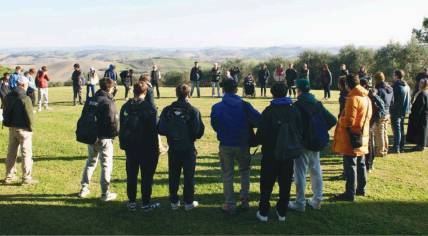
The ambition of CIPAS has been to constitute one of the first Living labs for soils starting from signing the Territorial Management Agreement that was called CIPAS: a pact for Soil. The participatory path of the CIPAS Project, with feet on the ground, was initiated with the event held in Suvignano on 15 November 2024, continued with the meeting in Montarrenti on 21 March 2025, and culminated with the meeting on 22 May in Siena. All events were characterised by experiential and popular activities on the ground, followed by small-group discussions and moments of synthesis and comparison. Municipal administrations and employees of the structures most involved in the topic actively participated.
Also present were representatives of Associations participating in projects promoted by the Municipality of Siena, university lecturers and researchers, and agricultural producers from the Biological District. The participation of classes from the technical agricultural institute and middle schools and fragile subjects made it possible to experience various possibilities to transfer the importance and centrality of the soil.
In the concluding phase a questionnaire was developed and administered to the participants and stakeholders involved in the CIPAS project which can be found in the annex to collect feedback and proposals, validate the SWOT analysis on spatial strengths, weaknesses, opportunities and threats which they identify for soils.
CresConSMin – Increasing stakeholders’ awareness of soil contamination because of mining waste storage (Jiu Valley, Romania)
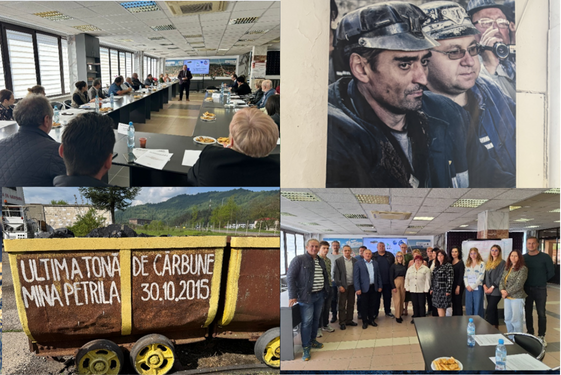
The CresConSMin Pilot aimed to raise awareness of soil contamination by post-mining activities such as tailing dams and abandoned quarries in the Jiu Valley microregion in Romania. During Pre-diagnosis, the sites and lands that have been affected by mining activities were identified and located, the level of soil contamination with heavy metals and other toxic substances from mining activity were investigated, to establish the degree of ecological risk. Afterwards, a series of soil management strategies and measures were proposed to reduce risks to public health and the environment. The Sociogram development identified and mapped the main relevant stakeholders’ categories such as institutional, education, social and economic actors.
The Territorial Management Agreement emphasized the conclusions of the workshops framework for collaboration that support the restoration and maintenance of soil health of the Jiu Valley microregion affected by tailing dams, while promoting sustainable agriculture and land use practices, with a long-term vision of improving ecosystem services, biodiversity and community resilience. The Replication potential was assessed during the last workshop where reflections
and recommendations were collected.
Enhancing the ability to monitor soil health of agricultural land leased by its owners for intense agriculture (Vinnytsia, Ukraine)
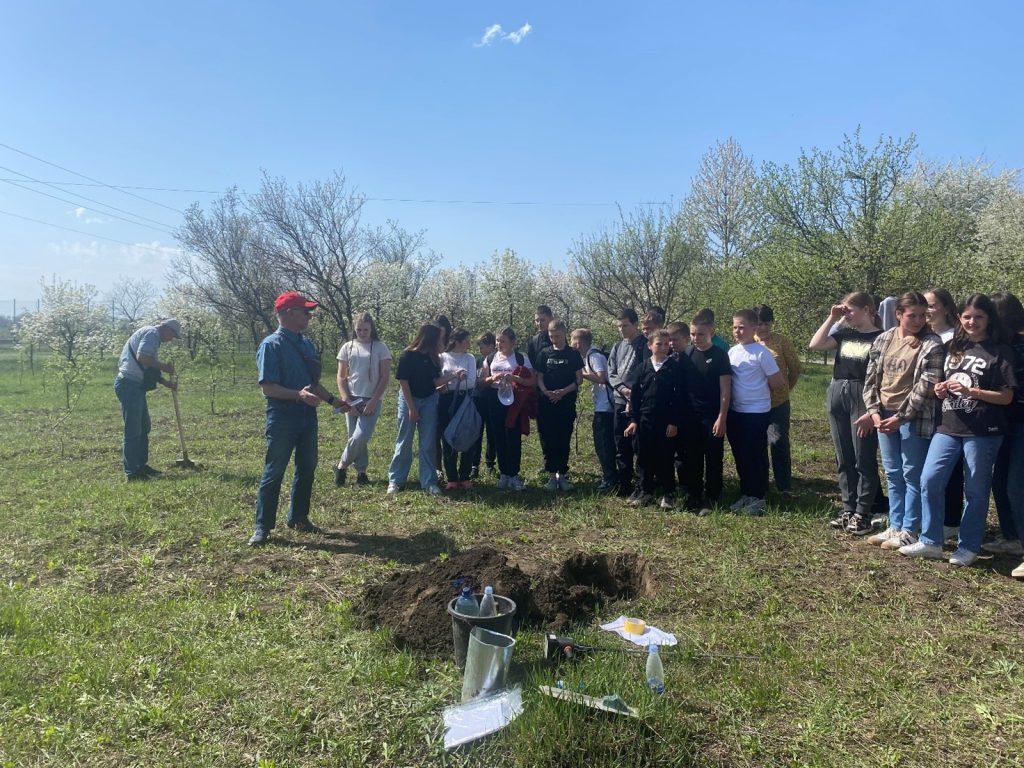
The project is aimed at preventing soil degradation in the Vinnytsia urban-territorial community due to the combined efforts of scientists, local authorities, farmers and citizens. Significant results have been achieved so far: a survey of about 300 land users was conducted, and in October 2024, a Territorial Management Agreement (TMA) was signed between the Institute of Feed Research and Agriculture of Podillya of NAAS, Vinnytsia City Council and the Farmers’ Association, which creates a legal basis for cooperation. The survey results showed that 68.6% of respondents consider monitoring of soil fertility and condition important for effective and profitable agricultural production; 25.3% – highly important and 6.2% – not very important.
The online platform “ProjectHUMUS289” was created, which allows community residents to use methodological recommendations from scientists on monitoring soil health and preventing its degradation. The implementation of agroecological practices – minimization of tillage, use of cover crops, soil protection technologies – are reflected in methodological recommendations for land users (posted on the online platform). All measures are aimed at reducing pollution, compaction and water erosion of soils, as well as increasing biodiversity.
Gezer Agricultural-soil regeneration (Gezer, Israel)
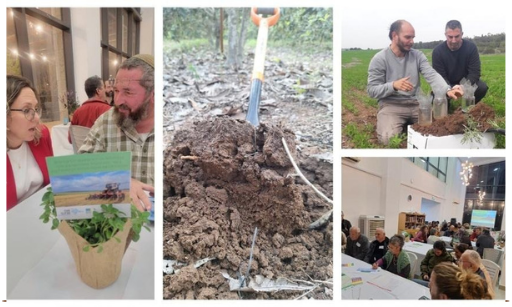
The Gezer Regional Council pilot, Gezer Agricultural Soil Regeneration, is an ongoing process that
is beginning to transform local agriculture toward a regenerative, soil-health-oriented system through a participatory governance approach. Gezer is a highly agrarian regional council in central Israel, where farmland represents 67% of its territory. During this year of the HuMUS pilot, the council and its partners launched a multi-stakeholder process that is already showing tangible initial results. Farmers, council staff, and external agencies came together in new ways, building trust, co-developing practical solutions, and starting to integrate soil health into everyday agricultural management.
Gorgona Smart Island (Gorgona, Italy)
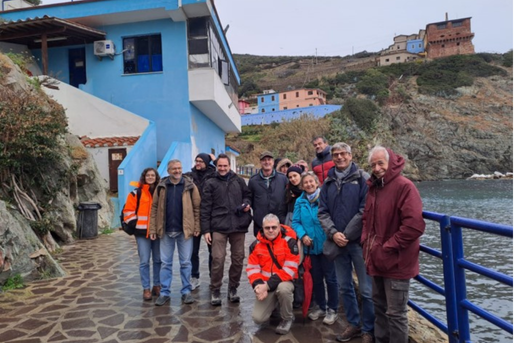
Gorgona, a small island in the Tuscan Archipelago, is the last Prison Island in Italy. There, inmates grow vegetables for internal consumption, vines and olive trees are also grown. Gorgona needs rational and sustainable management of the little soil useful for cultivation also to minimise food imports and to preserve the ecosystem. Agricultural work represents the possibility for inmates to redeem their past and take care of themselves. The challenge was therefore to give organicity and method to a correct management of the environment through a participatory process. The Gorgona Smart Island pilot drafted a shared and binding document that aims to define actions to protect soil and water and to guarantee continuity of agricultural production over time (TMA) in an eco sustainable way. The Municipality of Livorno, the National Park of the Tuscan Archipelago, Legambiente as non-governative organization, the agricultural companies that already work in Gorgona (Frescobaldi and the Cooperativa SS Annunziata), and the resident citizens have collaborated in the project.
Healthy soil – Healthy Soil Chemistry (SOSoil) (Lubelskie, Poland)
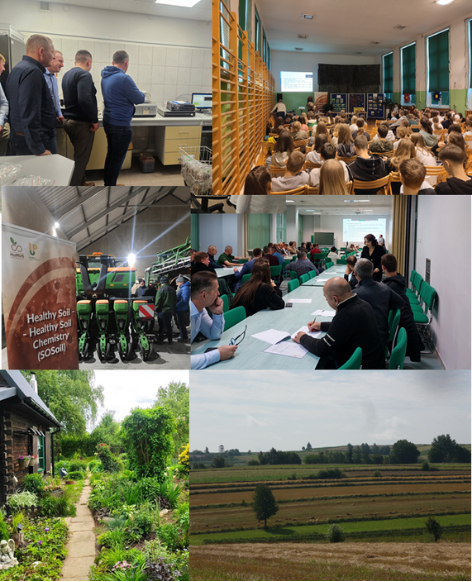
The SOSoil project, as part of the HuMUS project and the EU Soil Mission, engaged and activated municipalities in the Lubelskie region to increase cooperation among local Quadruple Helix stakeholders and support the co-implementation of solutions to protect and restore soil health at a regional scale. The participatory methodology, which included a stakeholder perception survey, key stakeholders, and a community workshop, was effectively implemented to establish participatory governance regarding soil health issues and threats in the Lubelskie region.
The conclusion highlighted that access to knowledge and infrastructure for monitoring soil health is essential for both stakeholders and citizens to understand their effects on soil health. A participatory approach not only enhanced citizen awareness but also increased farmers’ confidence in their knowledge, leading to a better understanding of how soil chemistry contributes to overall soil health.
Healthy Soil in Sesto (Sesto Fiorentino, Italy)
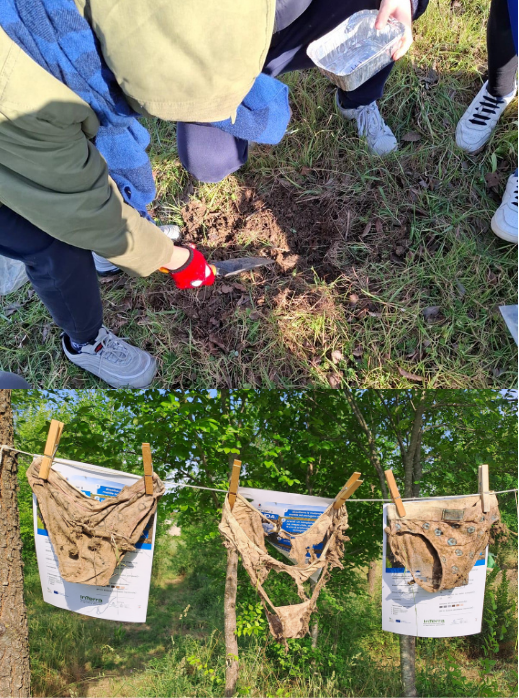
The Healthy Soil in Sesto – InTerra project addressed the growing issue of soil degradation in
Sesto Fiorentino, caused by unsustainable agricultural practices and urban-industrial pressures.
Recognizing the key role of soil in ecosystem services, food production, and climate regulation, the
project aimed to promote sustainable land use and foster stakeholder collaboration through the
development of a Territorial Management Agreement (TMA). This process was framed within the
broader objective of establishing a municipal organic district. Healthy Soil in Sesto – InTerra’s key impact lies in fostering a new awareness of soil as a common good and encouraging integrated, cross-sectoral governance. Though a formal organic district was not established, the process built strong foundations for future cooperation. The TMA offers a flexible, evolving tool to maintain stakeholder engagement and support the transition toward sustainable land stewardship.
LakiTERRA (Lakitelek, Hungary)
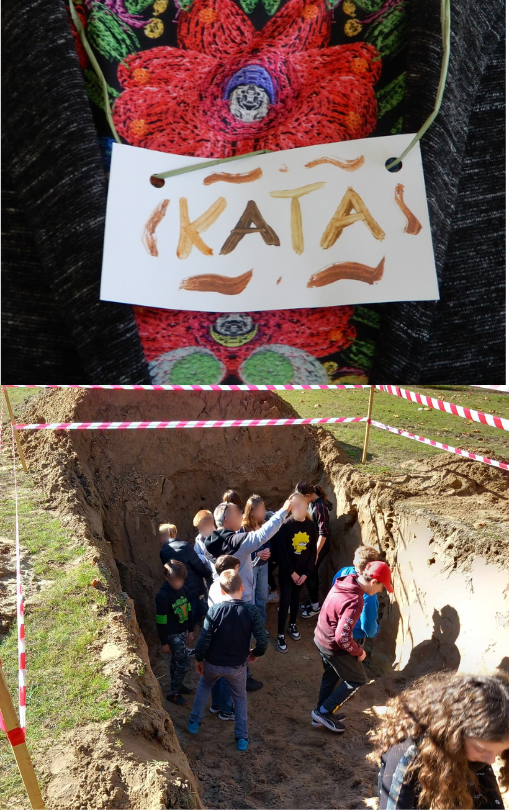
The LakiTERRA pilot project, implemented in Lakitelek (Hungary), set out to raise soil literacy and strengthen participatory soil governance at the municipal level. Through a combination of educational materials, capacity-building events, and intergenerational partnerships, the project demonstrated how local actors can be empowered to care for soil health.
Key outputs included two digital guidebooks on simple soil assessment methods – one for home gardeners and educators, and one for farmers wishing to better understand their soils – a series of six short educational films on common soil problems and solutions, and several one-day participatory trainings combining theory with hands-on demonstrations in school and home gardens, a regenerative farm, and even a botanical garden. The events concluded with the signing of a Territorial Management Agreement (TMA), confirming stakeholder commitment to soil stewardship.
Medi-Terra (Cilento, Italy)
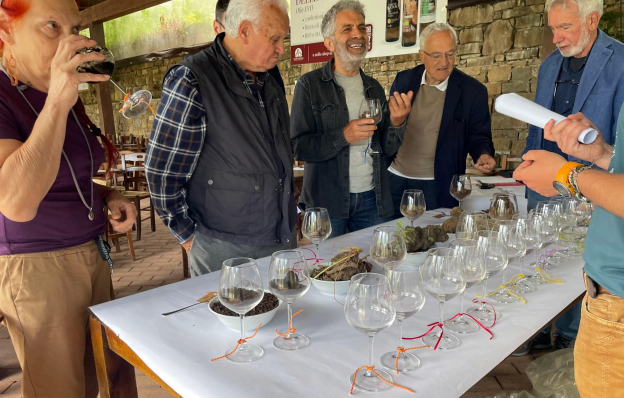
The Medi-Terra project, rooted in Italy’s Cilento National Park, set out to answer a fascinating
question: can humans actually smell the difference between healthy and degraded soil? The
core idea was that our innate connection to soil, like enjoying the scent of petrichor, could be
a key to inspiring more people to care about soil health. The adoption of innovative methods like the neuroscientific experiment and the Soil Sommelier workshops helped attract new audiences to soil health educational initiatives and to local markets of regenerative producers, and support from local authorities was vital for turning these ideas into real action through the signature of the TMA. Formally, this facilitated the creation of a plan to include a new soil health section in the Museum of the Mediterranean Diet and to further include action plans in the territorial development strategy through the Master Plan.
Prevention and minimization of soil threats within Valky community in Kharkiv region of Ukraine (PREMISOIL-UA) (Kharkiv, Ukraine)
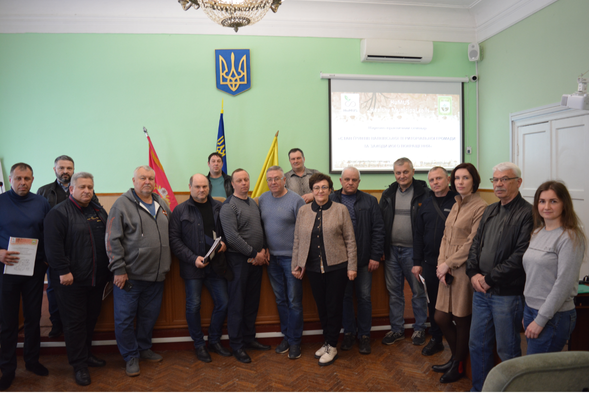
The pilot project PREMISOIL has been focused on the increasing of soil literacy within the Valky community in Kharkiv region of Ukraine and engagement of different social layers into public soil management on the municipality territory using soil conservation technics and novelties. The community is located on the northern-east part of country, and its area is 1018 km2. The total number of stakeholders directly involved in the participatory process and events was 31 persons, including 5 public entities from municipality, 10 academia, 16 farmers, 2 citizens, and 2 NGOs. The project team carried out the soil survey of 20 farms with taking and analysis of more than 170 soil samples that allow to define the main soil problems of the community.
Based on the project implementation, the regional government of the Kharkiv region has decided to support this activity by including it into the Action Plan for 2025-2027 for the implementation of the Kharkiv region Development Strategy for 2021 – 2027, approved by the decision of the regional council dated 04/24/2025 No. 1150 – VIII.
Quipar Valley Restoration Project (Quipar Valley, Spain)
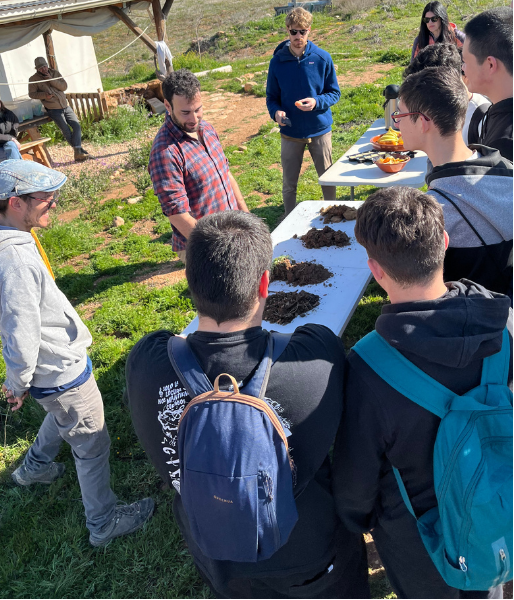
The Quipar Valley Restoration Project is a pilot initiative led by the Municipality of Caravaca de la Cruz (Departments of Environment and Rural Development) and the Regeneration Academy Foundation, with support from the EU-funded HuMUS programme. Its objective is to restore soil health across the upper catchment of the Quipar River in southeast Spain, a territory heavily impacted by erosion, aquifer depletion, unsustainable land use, and rural depopulation.
The project adopted a participatory, place-based approach grounded in the HuMUS methodology.
Over 60 interviews and 8 participatory workshops were conducted with farmers, educators, students, local authorities, and NGOs. Participants collaboratively diagnosed challenges, mapped systemic problems, envisioned a shared future, and proposed concrete actions. A systemic stakeholder and force map was developed to guide engagement, and spatial tools helped connect problems with places. The result of this process was the Territorial Management Agreement of the Quipar Valley, signed in May 2025 by over 30 actors from across the territory.
REveal and VAlorise Life of Soils (REVALS) (Lille, France)
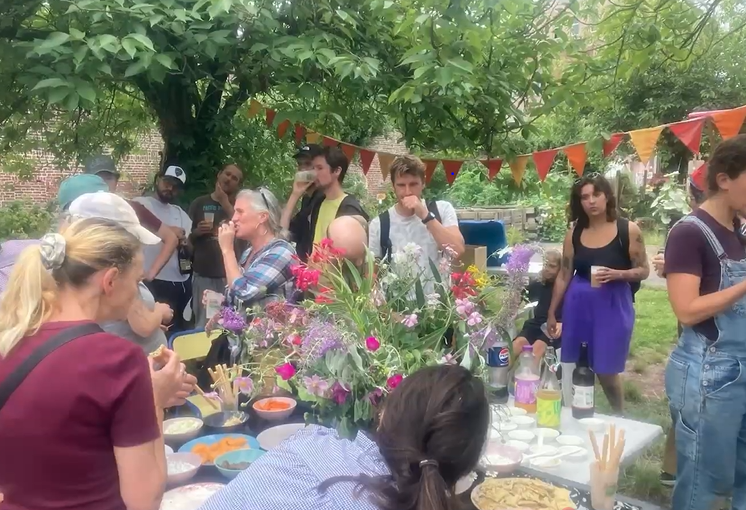
The REVALS project, part of the HuMUS initiative, supported the long-term transformation of a disused urban plot in the Trichon neighbourhood of Roubaix into a vibrant urban farm. Since 2018, this site has been co-developed by residents, local associations, public authorities, and urban farmers to promote ecological restoration, social cohesion, and food justice. With HuMUS funding, the project intensified its efforts by developing shared assessment tools, piloting ecological accounting methods, and formalising a new Territorial Management Agreement (TMA). A key achievement of the project was the update and signing of a new Territorial Management Agreement (TMA) in June 2025, which formalised commitments from multiple stakeholders, including the City of Roubaix, the hospital (nursing school), housing providers, social services, and grassroots organisations. This agreement recognised the farm’s contributions to soil restoration, social ties, health promotion, and enabled new land-use protections: the City of Roubaix proposed to classify the site as an agricultural zone in the metropolitan urban plan, effectively protecting it from future construction.
Soil health dialogue in eastern Styria (Styria, Austria)
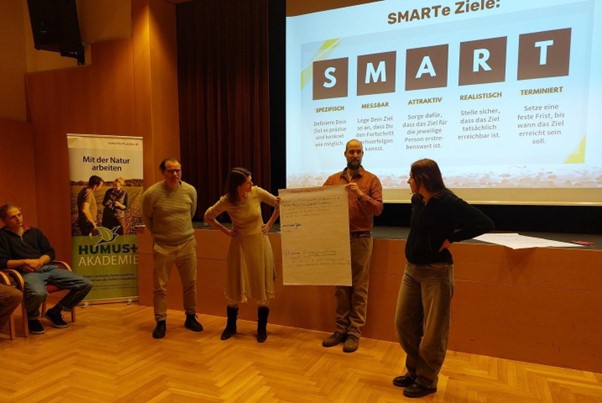
The HuMUS pilot project number 16 “Soil Health Dialogue in Eastern Styria” in East Styria (Oststeiermark) focused on strengthening soil health through a multi-stakeholder approach involving farmers, municipalities, schools, universities, and civil society. At the heart of the project was the co-creation and implementation of a Territorial Management Agreement (TMA), which defined specific, locally tailored soil health measures and their financing and monitoring strategies.
The project followed a participatory process, engaging over 100 stakeholders across the quadruple helix (practice, science, policy, civil society) in a series of regional workshops and a final online multiplier event. Central tools included a SWOT analysis of regional soil conditions and the development of a shared vision for regenerative agriculture, agroforestry, water retention, and awareness building.
Soil Health Talks (Tullnerfeld Ost, Austria)
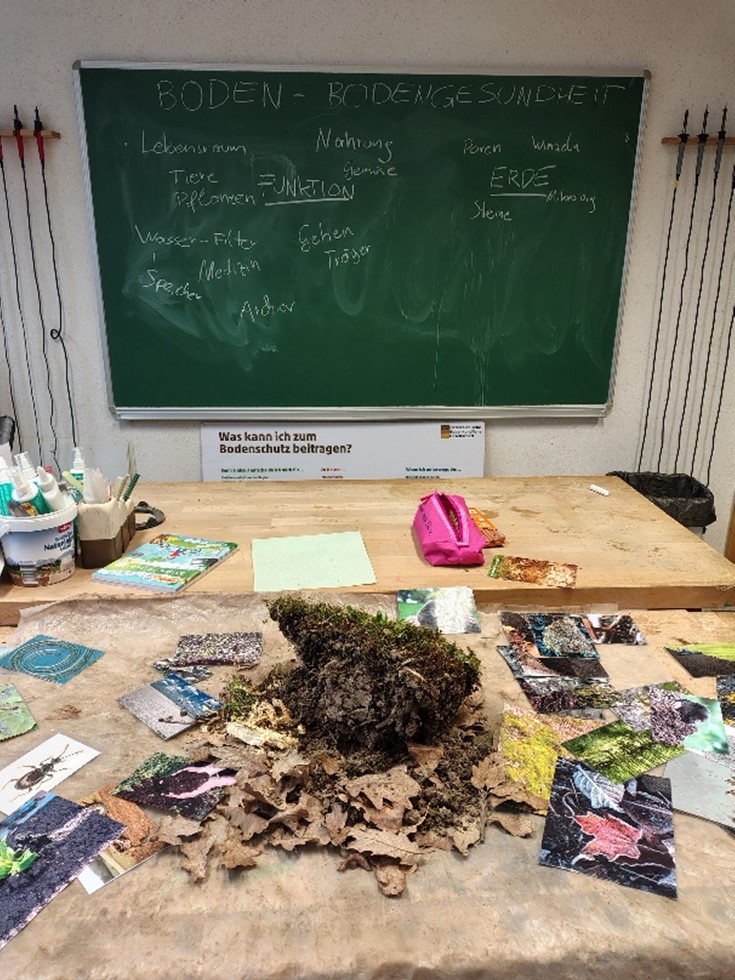
In Soil Health Talks, quadruplex stakeholders of the KLAR region Tullnerfeld Ost have worked on soil health in the region in all its aspects. In Soil Health Talks a consortium consisting of Environment Agency Austria, University of Natural Resources and Life Science and Federal Research Centre for Forest have worked in the region to enable an understanding of soil health and to protect and restore soil health at municipal and regional scale. In workshops and on experiment-days representatives of academia, local economy, government, and the general public made use of scientific methods of soil science, plant cultivation and biodiversity to gain an understanding of the importance of soil protection. The stakeholders have experienced and discussed soil health on general level as well as on specific level. The project has thus contributed to an increase in understanding soil health at Tullnerfeld Ost.
Soil reGen (Umbria, Italy)
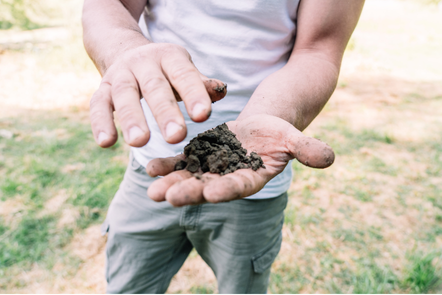
Soil reGeneration is a pilot action coordinated by Comune di Allerona within the Green Community Umbra Etrusca, an intermunicipal cooperation network in the south-west region of Umbria, Central Italy. The project was implemented in partnership with FELCOS Umbria and Ecomuseo del Paesaggio Orvietano, and in collaboration with ARPA Umbria and CNR-IRET as associated partners.
The project tested innovative approaches to participatory soil governance. Twelve
municipalities, over 17 associations, and five school communities were actively engaged. By
integrating scientific data with local ecological knowledge, Soil reGeneration developed several
shared tools: a Territorial Management Agreement (TMA), a youth-led Soil Community Map, Fuzzy
Cognitive Maps (FCMs), participatory SWOT analyses, and photographic documentation of key
sample areas and soil landscape sequences. The educational component was central: students
participated in interpretive walking trails, hands-on soil labs, a bootcamp, and a World Soil Day 2025 call to action.
Soil@TV (Torres Vedras, Portugal)
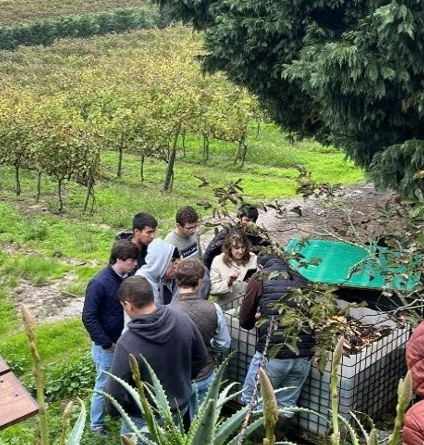
The 12-month HuMUS project pilot Soil@TV was developed in Portugal in the Municipality of Torres Vedras, where agriculture plays an important socioeconomic role, with 56% of the territory occupied by agricultural, pasture and agroforestry areas. Led by the National Institute for Agrarian and Veterinary Research (INIAV) and developed in partnership with the municipality by a multidisciplinary team, the project aimed to develop and implement an effective participatory process to facilitate extensive dialogue on soil health. The focus was on understanding the current state of soil related knowledge, management practices and monitoring routines, and on gaining more knowledge about available soil data. The aim was to define a set of soil descriptors and
indicators in order to establish an adequate baseline and implement a future monitoring system
initially focused on agriculture, particularly viticulture, due to its representativeness in terms of land use and socio-economic relevance in the region. The project involved developing a range of diverse and interconnected activities, with about 200 people involved in total, and the Territorial Management Agreement (TMA) was signed by representatives of 12 stakeholders, sharing a common Vision 2050 for the future of soil in Torres Vedras.
Suoli Agricoli Urbani Rigenerati (SAUR) (Padua, Italy)
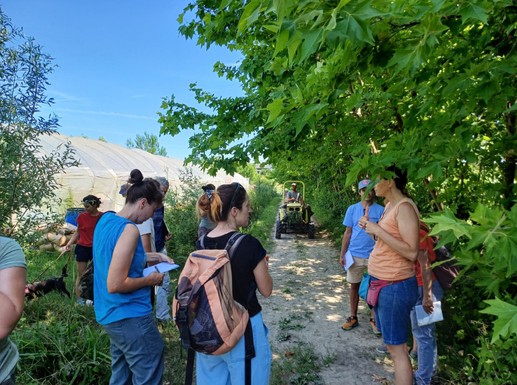
The SAUR – Suoli Agricoli Urbani Rigenerati (Regenerated Urban Agricultural Soil) pilot project was implemented over 12 months in Padua, Italy, to tackle key soil challenges such as soil sealing and degradation, issues tied to urban sprawl and intensive agriculture. It aimed to promote soil regeneration through urban agriculture by engaging stakeholders across sectors using participatory methods. At the heart of the project was the creation of a Territorial Management Agreement (TMA). Various educational and participatory activities supported the process, including public events on soil health, hands-on workshops in regenerative agriculture, and training sessions for farmers. The project also leveraged cross-project collaboration, particularly with the “Coltiva Padova” initiative, to strengthen local networks.
Despite strong engagement from academia and civil society, farmers’ participation was
limited, which emerged as a key challenge. Moving forward, better engagement strategies
are needed to ensure farmer involvement, as their practical experience is crucial to
successful soil regeneration. The project laid the groundwork for co-managing Padua’s new agricultural park and revitalized a dormant participatory process around it. SAUR also highlighted the need for better data and research on urban soil health.